
Full Circle
Amid floods, landslides, and a final bike-birding push, Christmas Bird Counts return.

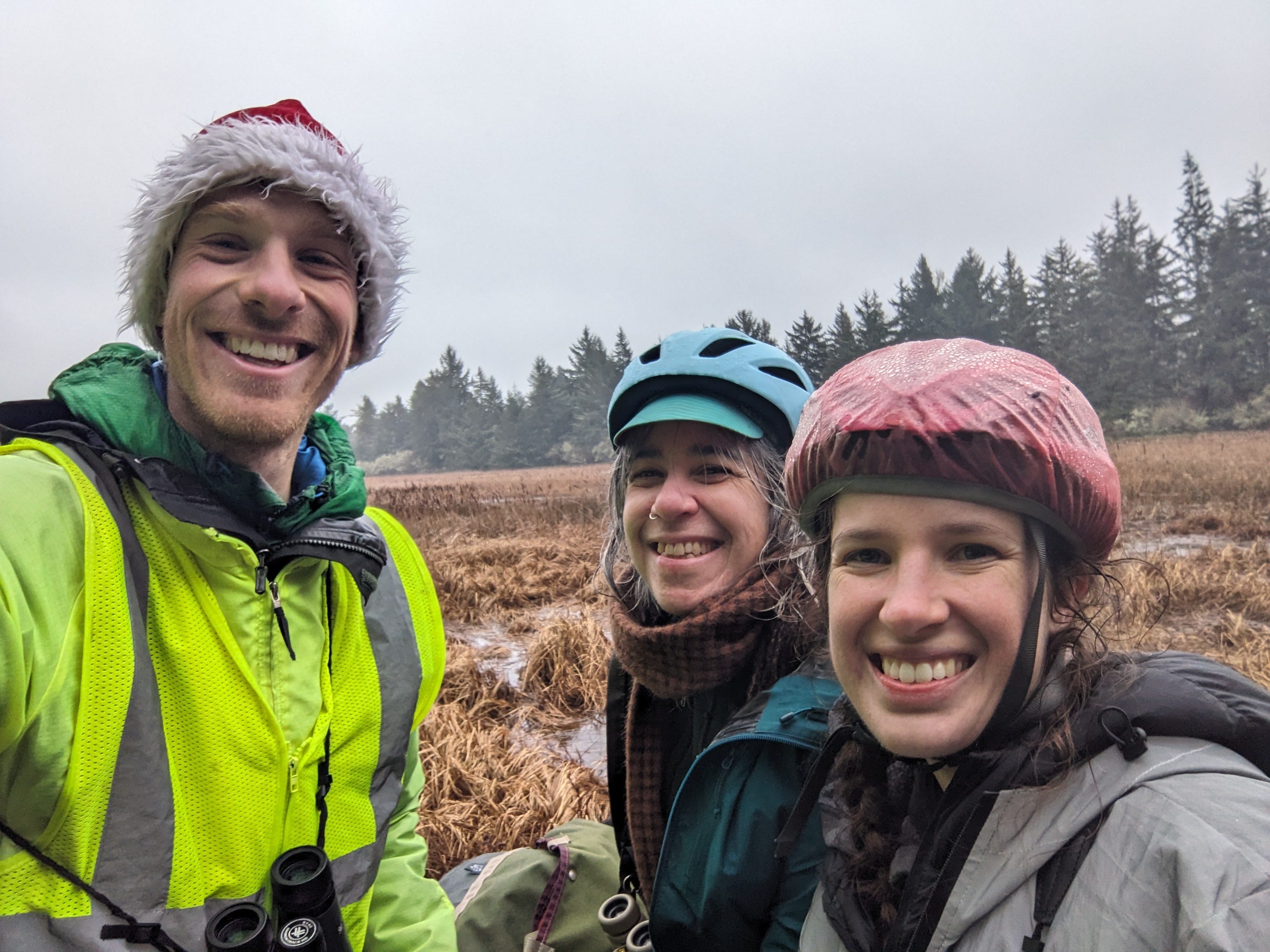
Season’s greetings!
It’s the first week after the winter solstice, and we are tilting again back toward the sun. From now on, each day will be longer than the one before. The change will be slow at first, even imperceptible, but by March, we will be gaining daylight in leaps and bounds, and summer’s endless evenings will not be far away.
In times like this, when nights are long and hate holds the reins of power, I find hope in this cycle of change. Each season brings contrast, helping me notice and appreciate the next. The changes keep me observant, discerning differences, arrivals, departures.
But there are other changes afoot—changes that are unavoidably apparent. While drought and wildfires now often characterize our summers and autumns, this month has brought the opposite problem. Water. So much water, all at once.
River after atmospheric river has dumped a deluge onto Oregon in recent weeks. Swollen and bloated, our waterways are swallowing the land around them. In Portland, I’ve never seen the Willamette River so high, nor so full of logs and debris.
This watery chaos has made for a dramatic start to the Christmas Bird Count (CBC) season, which extends from December 14 to January 5. If CBCs are new to you, I recommend reading this recent post by a writer I enjoy, Stephen Carr Hampton. Participating in the count in your town is easy and fun. If you’re in Oregon, start here. No birding experience is required!
Writing about Christmas Bird Counts brings this blog full circle: CBCs were the subject of my first post of 2025. Last season, I took part in five counts, and this season, I’d planned to participate in six, mostly by bicycle. However, flooding and torrential rain postponed one (Lincoln City), and blocked the bus route by which I planned to reach the next (Yaquina Bay).
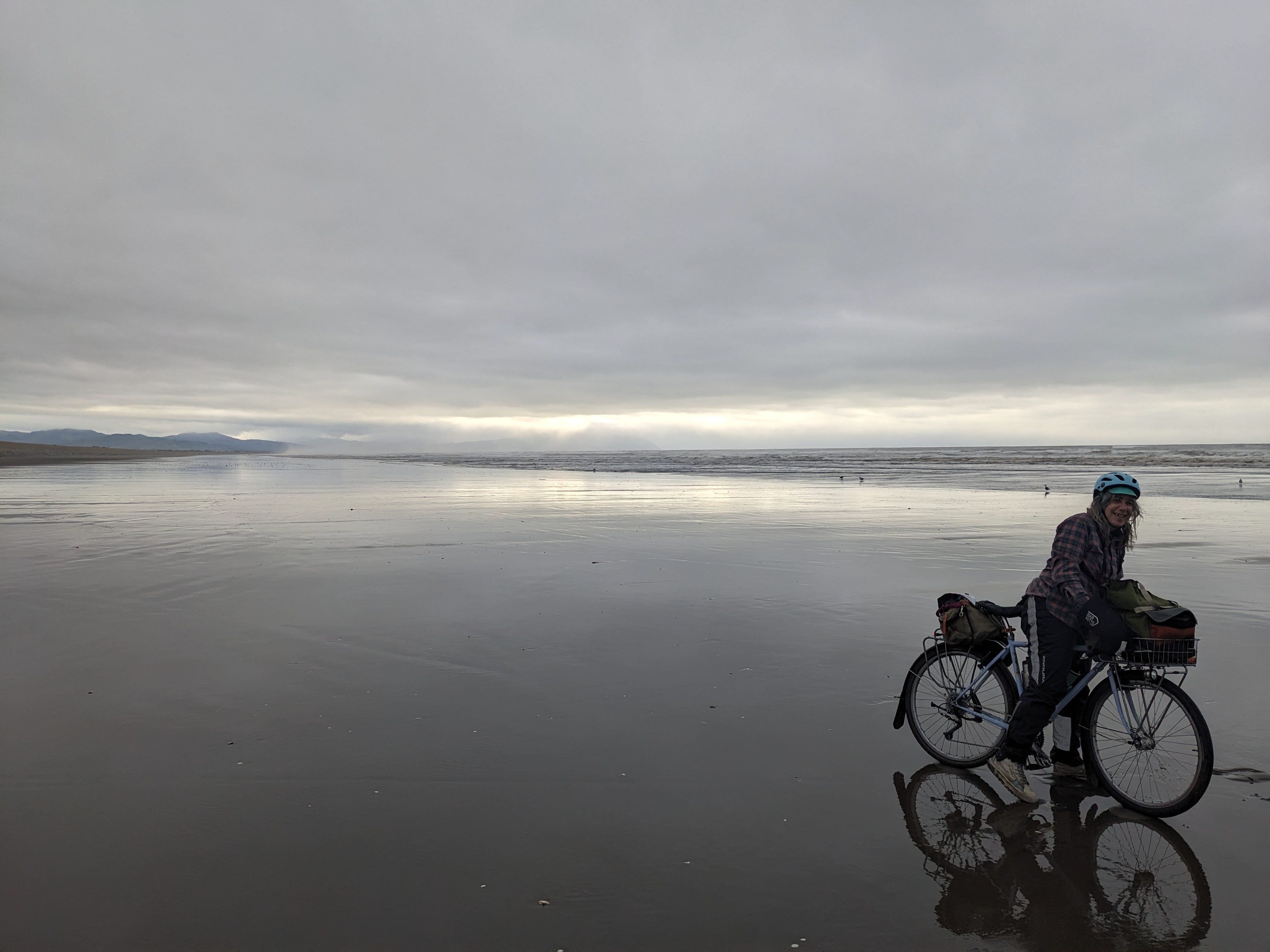
With landslides and flooded roads crisscrossing the coast, I had to cancel last week’s planned birthday bike trip down Hwy 101. However, Hazel, Molly, and I did still manage to make our way out to the coast for the Columbia Estuary CBC. Covering nine miles of the beach by bicycle was a fun ordeal. In planning our day’s route from Fort Stevens south to Sunset Beach, we hadn’t expected 20 mph headwinds from the south. We ended up backtracking, riding over 40 miles, and at times struggling to move forward at 5 mph. It was exhausting, and nonetheless, an amazing day in the elements.
As a community science project, the magic of a Christmas Bird Count really lies in the community. I love how CBCs bring together old friends and new, veteran birders and novices, backyard feeder-watchers and federal biologists, grandparents and grandchildren. Science has far greater power to change conditions and policy if the community cares about what the science is saying—and getting everyone involved in collecting the data is a great way to inspire such care.
The numbers, too, carry weight. Christmas Bird Counts are particularly valuable because they provide long-term data, documenting changes locally and nationally over the span of many decades (this is the 126th CBC season). While the exploding popularity of eBird has generated vast amounts of bird population data in the past ten years, datasets that go back well into the twentieth century are relatively rare. As climate change accelerates and baselines shift and slip, the stories CBCs tell about bird populations, ecology, and our collective past are ever more important.
That is part of why this year, I’m taking on the role of Count Compiler and organizing the Sauvie Island and Ridgefield Christmas Bird Count, a two-state operation with 36 teams and—as I’m still discovering—a huge number of moving parts. We’re still welcoming participants if you’d like to join in the fun on January 4th.
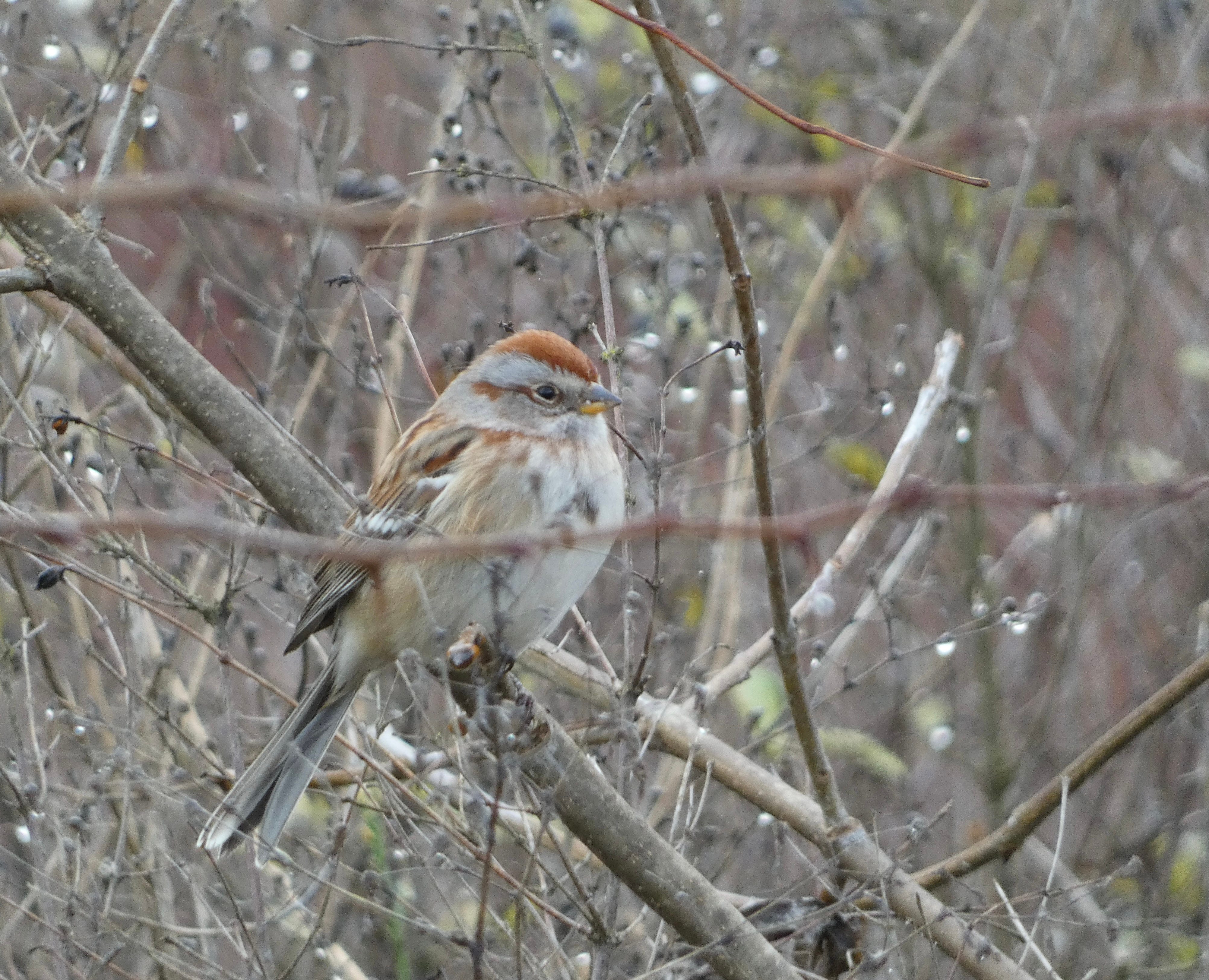
Of course, amidst all this, I’m nearing the conclusion of my Green Big Year. December has been full of adventures, searching for a few remaining birds that have eluded me. I’ve gotten lucky: a few days ago, a rare Summer Tanager showed up ten minutes from my apartment. And I’ve gotten skunked, with full-day rides to the summit of Larch Mountain (in a snowstorm!) and from Cannon Beach to Astoria yielding no new species. Yet, in all these escapades, I’ve had the blessing of feeling totally alive. That feeling is a gift that will stay with me long after the gravity of novel birds and numbers fades away.
In the spirit of the quest, however, I’m still in pursuit of three more birds. I’m at 297 species for the year, and with work and family commitments ahead, I have three free days remaining to reach 300. Wish me luck!
~Thomas


Great piece as usual, Thomas. I read Stephen Hampton's piece on the CBC as well. He has some good ideas. As you know I never give youth teams the dregs in terms of areas to cover--quite the opposite, as I hope compilers nationwide will read in my guide for CBCs included in National's web-based materials. The problem is more often that young birders, almost all boys if under 20, don't WANT to join teams with old crusties like me, though they would be great assets. They want to bird with each other in wolf-packs.
I think Hampton needs to chill regarding the complex issue of flexibility in data reporting. What matters is accuracy, not transfer method. Any method that conveys correct results is fine. As a regional editor part of what I do is help compilers clean bad data out of the CBC results before they go into the monster database. Sure, we can be nice about it up to a point, but if somebody insists that something is right when it is demonstrably wrong, putting their results into a database that is used for serious studies is inappropriate no matter anyone's age or social category. To do so is to over-privilege the social aspects of bird observation and the CBC.
As for using eBird or something similar to enter data, it has advantages but I do better with a hand notebook because I can scribble in it without lowering my eyes from the habitat, and sort out the scribbles later. It also has no potential issues if it falls into a puddle. I see little value in real-time data pours--the information resulting from the CBC is not a rare bird alert, it's a database. Getting the results out to participants and National need not be done in 48 hours. And yes, I hope anyone interested in nature will try a CBC. Sign me A. Curmudgeon.
Beautifully written. Good luck on 300 but even if it doesn't happen, congratulations on a great green year.